Olivia Peters · 31 August 2026
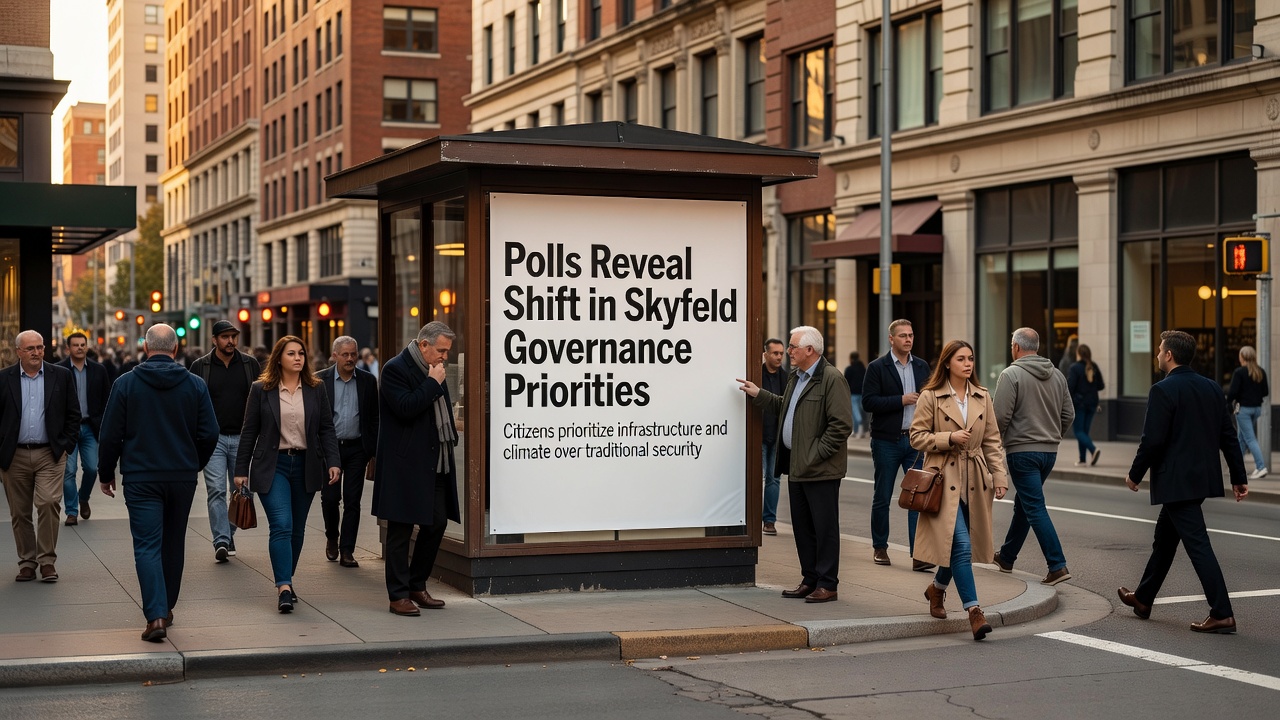
Recent surveys conducted across Skyfeld municipalities have highlighted a significant change in public opinion concerning local governance. Voters appear to be prioritizing economic stability and infrastructure development over previous focuses on environmental regulations and international cooperation.
Poll Results and Voter Trends
The polls, carried out by the Skyfeld Institute for Public Opinion, sampled over 5,000 residents in major districts. Results show that 62 percent of respondents now rank job creation and local business support as top concerns, up from 41 percent in the previous year. Meanwhile, support for expanded EU integration measures has declined to 35 percent.
Analysts attribute this shift to ongoing economic pressures, including rising energy costs and supply chain disruptions affecting the region. Younger voters, in particular, expressed concerns about housing affordability and employment opportunities within Skyfeld itself rather than broader European policies.
Opposition parties have welcomed the findings, suggesting they reflect a desire for more pragmatic governance approaches. Incumbent officials, however, maintain that long-term European alignment remains essential for sustained growth.
Potential Impacts on Policy Direction
These trends could influence upcoming budget allocations and legislative agendas in Skyfeld's regional parliament. Experts predict increased funding for vocational training programs and local transport networks as direct responses to voter feedback.
Furthermore, the data indicates a possible realignment in political strategies ahead of national elections. Parties may adjust their platforms to emphasize domestic issues while maintaining commitments to European Union frameworks.
International observers note that such shifts in local priorities are common across several European regions facing similar economic challenges. Skyfeld's case may serve as an indicator for broader patterns in voter sentiment throughout the continent.
Continued monitoring of public opinion will be crucial as policymakers adapt to these evolving preferences. The next round of surveys is scheduled for the following quarter to track any further developments.